

In This Newsletter:
A story about Sandwich Generation burnout and
A resource to help you avoid end-of-year burnout.
Burnout Beyond the Workplace
“Get it together,” Suzanna* told herself.
It was the end of September, and she was totally exhausted. “Buck up, buttercup,” she encouraged herself. But it wasn’t enough. Her motivation had vanished. The work she loved felt “blah.” Suzanna couldn’t figure out why she was feeling so off.
She didn’t realize that she was burned out…

…until I explained that burnout can happen in every aspect of our lives.
Burnout Can Affect Every Area of Life
The concept of burnout has been around since the early 1970s when German-American psychologist Herbert Freudenberger introduced it. Burnout researchers generally regard burnout as a state of exhaustion, depersonalization, and reduced personal effectiveness resulting from exposure to chronic workplace stress.
Burnout isn’t limited to the workplace, though.
We can experience burnout in almost every area of our lives that involves sustained mental or physical effort (in other words, work). That means you can experience burnout in
your paid job,
unpaid caregiving,
volunteer work,
relationships, and
hobbies.
That’s what resonated with Suzanna. She thought burnout was reserved for the extreme exhaustion and disconnection one might experience in their paid work. She didn’t realize she could be burned out from caregiving.
Sandwich Generation Burnout
Suzanna is part of the sandwich generation. About half of Americans in their 40s are sandwiched between two generations, raising children under 18 and having an adult parent age 65 or over at the same time.

Suzanna is caring for her aging parents while raising two teenagers. She described one of her teenagers as “spicy.” He keeps her on her toes. And it doesn’t help that sometimes her aging parents act like children. The complex mental, emotional, and physical effort she spent taking care of everyone began to take a toll.
Suzanna told me, “My burnout overflowed into every area of life.” That’s why even the work she loved began to feel lackluster.
Recovering from Caregiver Burnout
Once Suzanna realized that she was burned out from caregiving, she began to be more gentle with herself. She told me, “I no longer tell myself I’m being lazy for crashing on the couch to watch Netflix while sipping a glass of wine.” Suzanna knows she needs the rest. She has also decided to speak with a therapist for more support, and she wants to make some changes to her prayer life as well.
For Suzanna, acknowledging her burnout was key. Now that she has identified what was making her feel out of sorts, she can take steps to recover well and prevent burnout in the future.
*Suzanna is a pseudonym used to protect the identity of the individual I interviewed for this article.
Avoiding End-of-Year Burnout
The end of the year is ripe for burnout. It’s a rush from Thanksgiving to Christmas. In addition to parties, gifts, and school plays, we have deadlines and deliverables. We may have funds to raise and financial statements to reconcile. If we’re not careful, we can be ringing in the new year completely fried.
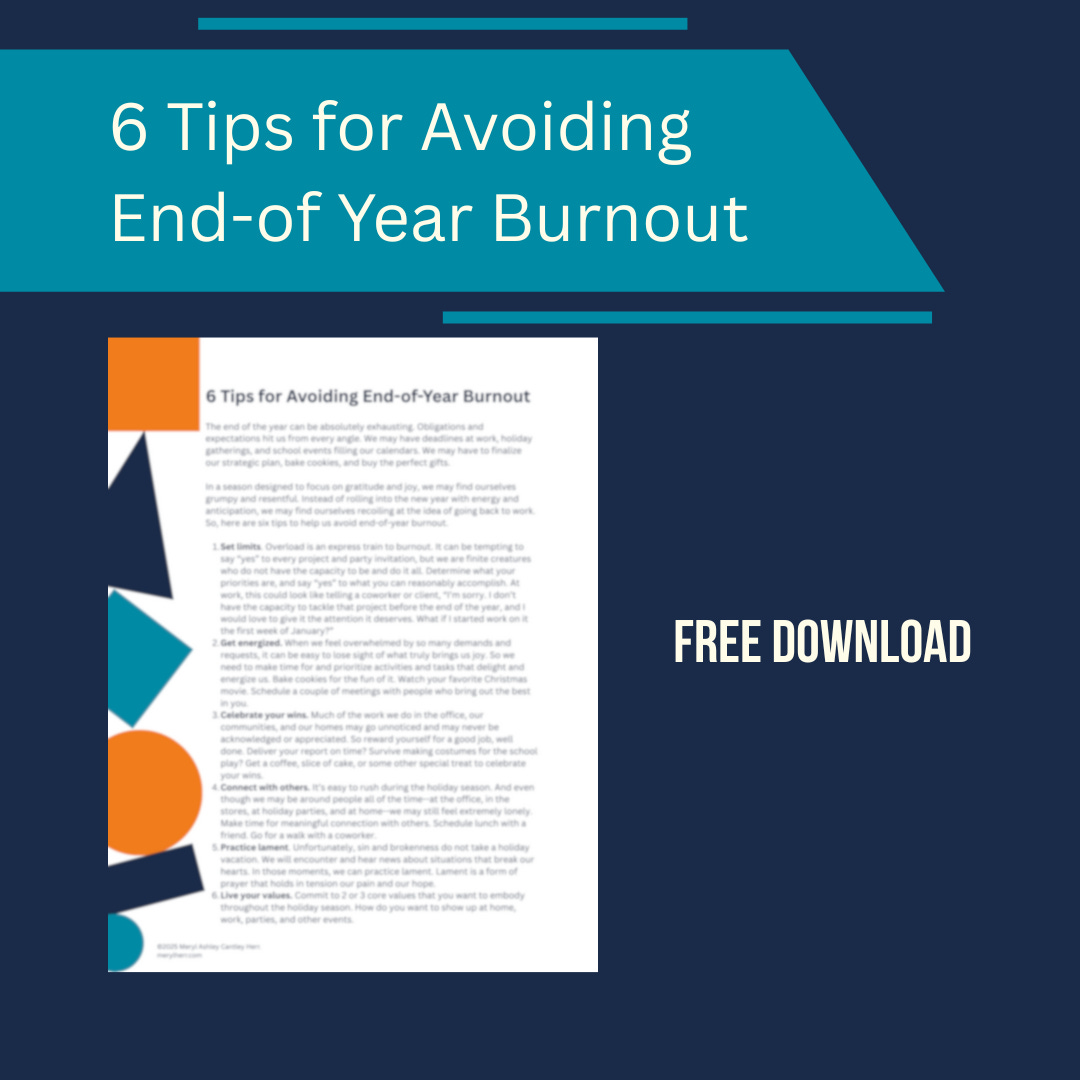
Do you want to be proactive in avoiding burnout over the next few weeks? Then be sure to download this FREE PDF containing 6 tips for avoiding end-of-year burnout.
Happy Thanksgiving
I’m truly grateful that you’re part of this Substack community. Have a wonderful Thanksgiving holiday, and I’ll see you in your inbox in December.
If you don’t currently subscribe and want to make sure you receive my posts as soon as they’re published, subscribe today!


I appreciated learning where the term "burnout" comes from, and I love the guy's name: Herbert Freudenberger. Thanks, Meryl!